Der Ruf nach „AI-first“ wird immer lauter – diskutiert in Boardrooms, verankert in Strategieplänen und bestätigt durch Branchenanalysen.
Auch wenn der Begriff nicht fest definiert ist, bedeutet „AI-first“ im Kern: Künstliche Intelligenz wird zum neuen Leitbild Ihres Unternehmens. Sie ist nicht nur ein Tool, sondern prägt Denkweise, Unternehmenskultur und strategische Entscheidungen über Prozesse, Workflows und mehr.
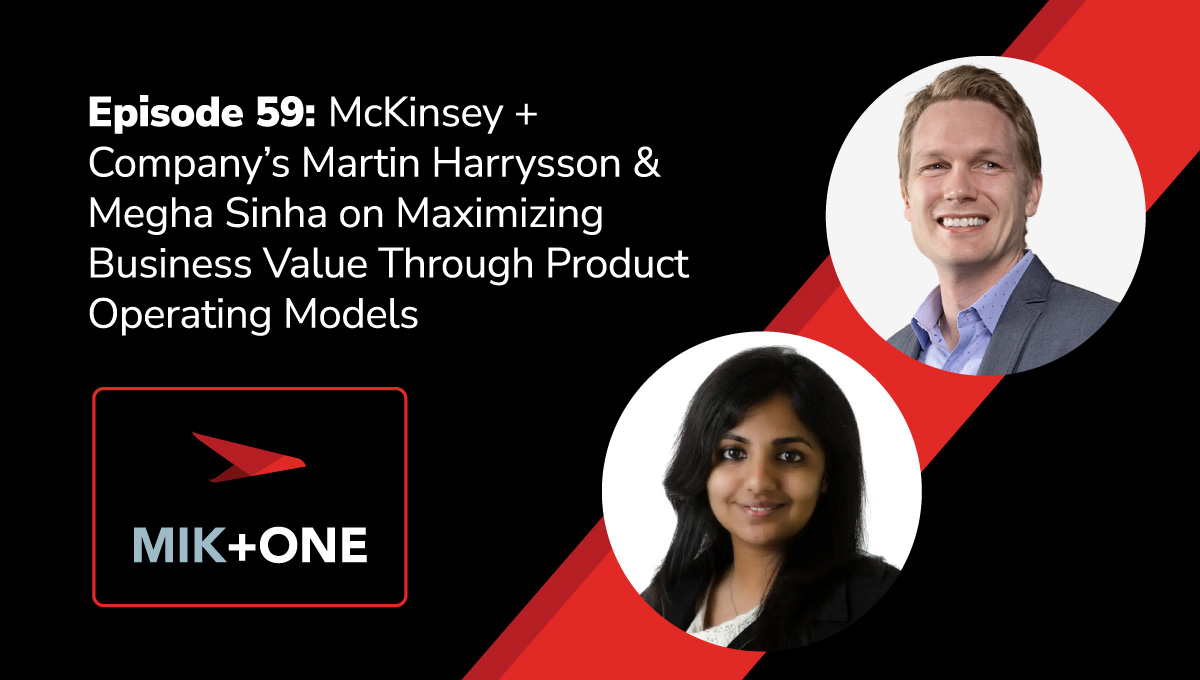
Der Wandel ist unvermeidlich, und viele Unternehmen wollen sofort loslegen. Doch laut Megha Sinha, Partnerin bei McKinsey und Beraterin von Fortune-500-Führungsteams im Bereich KI- und Produkttransformation gilt: Ohne Product-first kein AI-first.
„Ein Produktbetriebsmodell ist die absolut entscheidende Grundlage, um den Sprung zu einer KI-zentrierten Organisation zu schaffen. Das können Sie nicht umgehen“, erklärte Sinha kürzlich in einem Webinar mit Planview, wo sie auf die Bedeutung eines Produktbetriebsmodells für das Erzielen messbarer Geschäftsergebnisse verwies.
Was genau geschieht also in dieser neuen Phase des KI-Zeitalters? Und warum ist Ihr Betriebsmodell der entscheidende Hebel? In diesem Blogbeitrag werfen wir einen Blick auf die vier Paradigmenwechsel, die KI für Organisationen mit sich bringt. Zudem erklären wir, was Unternehmen tun müssen, um wirklich davon zu profitieren.
Wenn Sie tiefer eintauchen möchten, sehen Sie sich die vollständige Aufzeichnung des Webinars „Product Operating Model Principles Transforming Fortune 500s“ an. Dort erhalten Sie praxisnahe Beispiele für Investitionen in Produktbetriebsmodelle, Implementierungs-Roadmaps und Erfolgsmetriken – alles kommentiert von der Expertin Megha Sinha.
Weitere Informationen: Die wichtigsten Gründe für die Einführung eines Produktbetriebsmodells
Die vier Paradigmenwechsel, auf die Sie sich vorbereiten sollten
Basierend auf ersten Proof-of-Concepts und skalierenden Implementierungen mit Kund:innen skizziert Sinha vier wichtige Veränderungen, die KI für Enterprise-Organisationen mit sich bringen wird. Einige führende Softwareunternehmen im Silicon Valley erleben sie bereits – und für viele Fortune-500-Unternehmen aller Branchen stehen die Veränderungen unmittelbar bevor.
1. Transformation der Produktentwicklung
Der traditionelle Produktentwicklungszyklus, bei dem jemand ein Produktanforderungsdokument erstellt, es in Epics und User Storys übersetzt und dann mit der Entwicklung beginnt, hat ausgedient.
„Ihr Produktentwicklungszyklus wird sich in der KI-orientierten Welt grundlegend verändern“, erklärt Sinha. „Der Workflow wird völlig neu gestaltet.“
Was heißt das konkret?
- Spezifikationsgesteuerte Entwicklung und Tests: Langwierige Anforderungsdokumente werden durch Prototypen ersetzt, und der Weg vom Konzept bis zum funktionierenden Code verkürzt sich drastisch.
- Komprimierung in allen Phasen: Organisationen werden eine Beschleunigung in allen Phasen der Produktentwicklung feststellen – von Discovery über Build und Test bis zum Betrieb. Wochen werden zu Tagen, Tage zu Stunden.
- Engpassverlagerung: „Heute sagen Unternehmen: Unsere Entwickler:innen schreiben nicht schnell genug Code“, so Sinha. „Morgen liegt der Engpass im Code-Review.“
Mit anderen Worten: Das Problem wird nicht darin bestehen, dass nicht genug Code geschrieben wird – denn KI-Agenten werden diese Aufgabe übernehmen. Die eigentliche Herausforderung wird sein, die richtigen Dinge zu entwickeln und Qualitätsstandards einzuhalten.
Dieser Wandel hat massive Auswirkungen auf die Teamstrukturen, die erforderlichen Skills und den Fokus der Führungskräfte.
Weitere Informationen: KI-Tools in der Praxis: Die Gründe für ausbleibenden Erfolg
2. Neue Formen der Zusammenarbeit
Sprint-Zyklen werden sehr viel kürzer werden. „Ein Sprint könnte nur noch einen Tag dauern“, prognostiziert Sinha.
Ein eintägiger Sprint könnte folgendermaßen funktionieren: KI-Agenten und Menschen schließen in Zusammenarbeit einen gesamten Zyklus in 24 Stunden ab – schnelle Nutzerforschung, schnelle Prototypenentwicklung, sofortiges Kundenfeedback, KI-generierter Code, automatisierte Tests. Fertig.
„All das geschieht [...] innerhalb eines Tages oder weniger, während es früher zwei Wochen gedauert hat“, sagt Sinha.
Aber: Voraussetzung für die effektive Beschleunigung der Sprint-Zyklen ist das richtige Betriebsmodell. Notwendig sind:
- klare Produktverantwortung und Entscheidungsrechte
- entscheidungskompetente Teams, die schnell handeln können
- zielorientierte statt Output-getriebene Metriken
- Fähigkeit zur kontinuierlichen Bereitstellung
- enge Feedback-Loops mit den Kund:innen
Ohne diese Basis führen schnellere Entwicklungszyklen eher zu Chaos als zu Mehrwert.
Jetzt ansehen: Five Steps to a Product Operating Model – mit Dr. Mik Kersten
3. Teams im Wandel
Eine provokante Prognose von Sinha: „Beinahe 100 % Ihrer Mitarbeiter:innen werden in zwei Jahren neue Rollen haben.“
Warum? Weil KI-Agenten ganze Entwicklungszyklen übernehmen, die jetzt von Menschen verwaltet werden. Das bedeutet nicht, dass Menschen ersetzt werden – aber ihre Aufgaben ändern sich.
„Ihre Entwickler:innen werden zunehmend in spezialisierte R&D-Rollen schlüpfen und sich auf Probleme mit höherer Priorität konzentrieren. Sie werden zu Definierer:innen und Strateg:innen.“
Vom reinen Umsetzen zum Gestalten. Vom Schreiben jeder einzelnen Codezeile zum Problemlösen. Von der taktischen Implementierung zur strategischen Ausrichtung.
Zudem werden Teams kleiner. Sinha verweist auf Amazons berühmte „Zwei-Pizza-Regel“ – Teams, die klein genug sind, um mit zwei Pizzen versorgt zu werden. In einer KI-gestützten Umgebung wird daraus die „Ein-Pizza-Regel“.
Kleinere, fokussierte Teams, lösen wichtige Probleme, während die KI einen Großteil der Ausführung übernimmt.
Dies wirft jedoch zentrale Fragen in Organisationen auf:
- Wie können wir unsere derzeitigen Mitarbeiter:innen für diese neuen Rollen qualifizieren?
- Wie sehen Karrierepfade in dieser KI-orientierten Welt aus?
- Wie gewinnen und halten wir Talente?
- Was passiert mit den Menschen, deren Positionen am meisten von der KI-Automatisierung betroffen sind?
Unternehmen, die diese Fragen heute angehen, sichern sich morgen einen massiven Wettbewerbsvorteil.
Weitere Informationen: Die Zukunft von KI-Agenten im Unternehmen abbilden
4. Wachstum durch Geschwindigkeit
Das Ergebnis der ersten drei Veränderungen: eine enorme Beschleunigung.
Sinha skizziert die möglichen Auswirkungen:
2–3-mal schnellere Entwicklung von Features: Die Zeit von der Idee bis zum Einsatz des Features verkürzt sich erheblich. Organisationen, die bereits ein hohes Tempo haben, werden noch schneller.
5–10-mal höhere Innovationskapazität: Das ist der entscheidende Gewinn. Wenn Teams weniger Zeit mit der Ausführung verbringen, können sie mehr Ideen erforschen, mehr Hypothesen testen und in einem Tempo innovieren, das heute nur schwer vorstellbar ist.
Mehr Zeit für wertschöpfende Arbeit: Anstatt Zeit für die Koordination zwischen Teams und für manuelle Prozesse aufzuwenden, konzentrieren sich die Mitarbeiter:innen auf Kundenprobleme und kreative Lösungen.
Doch die wichtigste Erkenntnis lautet: Geschwindigkeit ohne Richtung ist Chaos.
Je produktiver Einzelne durch KI werden, desto wichtiger werden strategische Funktionen:
- Die richtigen Probleme definieren: Was steht im Einklang mit der Strategie? Was bringt den Kund:innen einen Mehrwert? Was schafft Wettbewerbsvorteile?
- Teams koordinieren: Wenn Teams schneller entwickeln können, werden Abhängigkeiten und Integrationspunkte nicht weniger, sondern wichtiger.
- Arbeit und Strategie verbinden: Wenn mehr Initiativen möglich sind, ist die Ausrichtung auf die Unternehmensziele von größter Bedeutung.
- Engpässe früh erkennen und beseitigen: Wie wir bereits wissen, verlagern sich Engpässe. Organisationen müssen diese schnell erkennen und angehen.
In der Praxis bedeutet das: Frameworks für vernetztes Arbeiten wie Objectives und Key Results (OKRs) werden zur kritischen Infrastruktur – nicht zum Nice-to-have.
Weitere Informationen: Das Tor zur Zukunft: Wie KI zum Differenzierungsfaktor strategischer Vorreiter wird
Was bedeutet das für Ihr Unternehmen?
Diese vier Paradigmenwechsel finden in führenden Organisationen bereits statt. Ist auch Ihr Unternehmen bereit, von diesen Veränderungen zu profitieren? Denken Sie daran: Vorbereitung bedeutet nicht nur, neue KI-Tools anzuschaffen. Es geht vielmehr darum, das richtige Betriebsmodell als Grundlage zu haben, das es Ihnen ermöglicht, KI sinnvoll, skalierbar und wertschöpfend zu integrieren.
Erfahren Sie mehr über die fünf Säulen eines Produktbetriebsmodells und finden Sie heraus, wo Ihre Organisation heute steht. Laden Sie unser E-Book „Creating an Outcome-Based Enterprise“ herunter.
Über die Expertin: Megha Sinha ist Partnerin bei McKinsey & Company in New York. Sie berät Vorstände und Geschäftsleitungen zu Produkt-, Technologie- und KI-Strategien und hat in den letzten vier Jahren über 25 groß angelegte Transformationen in den Bereichen Finanzdienstleistungen, Einzelhandel, Telekommunikation und Gesundheitswesen begleitet.