The most powerful metaphor for modern leadership comes from the symphony orchestra.
When you watch a conductor at work, they guide the flow of music with their baton. If a musician makes a mistake, they give a subtle tap to get them back on track. What they never do is jump down, grab the instrument, and start playing themselves.
Yet that’s exactly what many leaders do. They see a problem, dive in, and solve it themselves rather than asking: “What environment do I need to create so this person can perform better?”
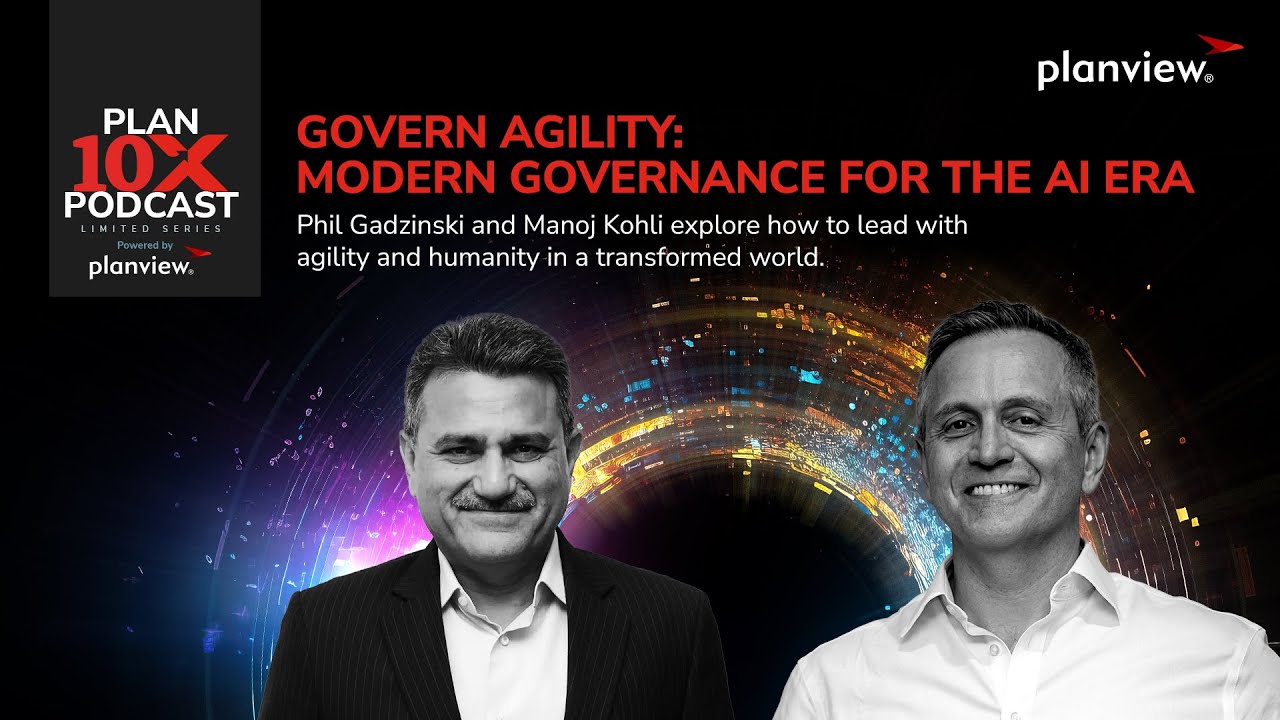
In the latest episode of the Plan10x podcast, host Manoj Kohli sits down with Phil Gadzinski—co-author of the Amazon bestseller Govern Agility and former APAC Head of Transformation at Bupa—to explore how leaders must rethink their approach to governance, team development, and their own roles.
Here are the key leadership lessons from their conversation.
1. Evolve Beyond Industrial-Age Leadership
Most management training is still rooted in Taylorism—an early-1900s approach of measuring how many pins a worker can make in a day and rewarding higher output. Business schools bolt on contemporary ideas, but underneath it all sits this outdated foundation.
This matters because statistical management models work for factory floors, not creative knowledge work. Great technical talent gets promoted to management, but when nobody teaches them that leadership is a completely different job, they keep doing what they know—the technical work—instead of leading.
What needs to change: Recognize that leadership requires different skill sets—however, command-and-control isn’t one of them. Adopt training programs that align with your culture, and invest heavily in developing your talent.
2. Role Modeling Matters More Than Mandates
Phil shared a thoughtful example from ANZ Bank. A CEO spent 10 years shifting the culture—breaking silos, building cross-functional teams, changing how people think and work. Financial results improved steadily over the decade.
Within three months of that CEO leaving, it all unraveled. A new CEO introduced new ideas, and the organization reverted almost immediately to where it had started. Why? The role modeling disappeared.
As Phil observes: “I don’t think you can force people to think differently.” You can’t mandate a new mindset through training programs or executive decrees. But you can find small, visible, repeatable behaviors that demonstrate what you want the culture to become.
Another organization Phil knows decided that leaders would wash their own coffee cups. It sounds trivial, but walk into any office kitchen full of dirty cups, and you immediately question whether people take responsibility. Clean kitchens signal that people take pride in their workplace.
How to make change stickier: Tangible actions you can demonstrate consistently are more effective than mandating mindset shifts. (Read: Your behavior matters more than your words.)
Read Next: Why Proactive Change Management is the Right Approach to Transformation (Part 1)
3. Embrace Trust But Verify
Traditional governance systems assume low trust. Someone far from the work needs assurance that things are being done correctly, so layers of oversight, approvals, and checkpoints get added.
Modern, agile systems require the opposite: high trust with appropriate verification. This means creating transparency where it makes sense without drowning everyone in information. Radical transparency sounds good in theory, but it leads to overload and paralysis. Sensible transparency means finding the right zone for your context.
A new approach to trust: Move from low-trust to high-trust governance. Identify areas where you don’t need all the answers and which tools and teams can quickly get them, when needed.
4. Develop Curiosity and Empathy
Phil referenced the TV show Ted Lasso and its memorable line about being curious rather than judgmental. For leaders facing relentless change—new AI tools, shifting market conditions, evolving customer expectations—curiosity is survival equipment.
A learning culture adapts to change better than a fixed culture. And a learning culture starts with leaders who demonstrate genuine curiosity and show empathy for what their teams are experiencing. Your people are under pressure, too. They’re being asked to learn new tools, adopt new processes, and deliver results simultaneously.
A learning mindset means: We can’t say two things enough: First, think about it from the perspective of your people—they read job outlook reports as much as you do. Saying “just use AI” rings like a clanging cymbal. Second, don’t passively delegate AI learning to your teams. Leaders must personally build new skills and engage with AI tools to be relevant and effective.
5. Balance Workforce Development
When comparing your team’s capabilities with where you need to go, start by assessing the scope of change. Is the new work 30% different from what they do now? Or 70% different? This determines your investment strategy.
If it’s a modest shift, training programs can bridge the gap. If it’s a significant departure, you’ll need to balance upskilling existing employees while bringing in new expertise. The goal is to keep current team members engaged and learning while adding complementary skills.
Managing capability transitions: Help current employees transition from creator to composer—support them as they evolve from manual creation to orchestrating AI and automation.
Read Next: Beyond Utilization Rates: How AI is Solving the Talent “Visibility Gap”
6. Be Human
Leaders at all levels of an organization face immense pressure to set strategy, meet performance targets, deliver business outcomes, learn new tools, and change how they work. It’s relentless—but you don’t have to have it all figured out.
Give yourself grace: Accept that you’re human. Take a breath and step back. Focus on progress, direction, and continuous improvement rather than having all the answers.
The Bottom Line
Modern leadership is about creating environments where others can succeed, modeling the behaviors you want to see, staying curious, and accepting that you’re moving through uncertainty alongside your team—not from a position of having all the answers.
What Else You’ll Learn
While this blog post focuses specifically on leadership, the full podcast conversation between Manoj Kohli and Phil Gadzinski covers much more ground on modernizing governance for the digital age. Listen to the complete episode to discover:
- Why 90% of AI experiments are failing
- Real-world governance case studies
- How to become truly data-driven in your delivery systems
- The drain of organizational structure on delivery speed
- When to choose radical change versus continuous improvement
Experience AI for Connected Work with Planview AnviTM — the AI that connects strategy to delivery. Anvi delivers guidance and takes action using deep expertise and contextual understanding of your data, helping teams prioritize and achieve results with AI tailored to your organization. See what Anvi can do