Editor’s Note: Chris Gallivan is a Principal Product Adoption Manager at Planview, where he works with customers to help them build real capability with Planview Anvi®. Since joining Planview in 2022, he has worked directly with teams navigating the gap between switching on AI and putting it to work — helping them define context, develop reusable prompts, and move from testing to embedding. The patterns in this post come from that work.
***
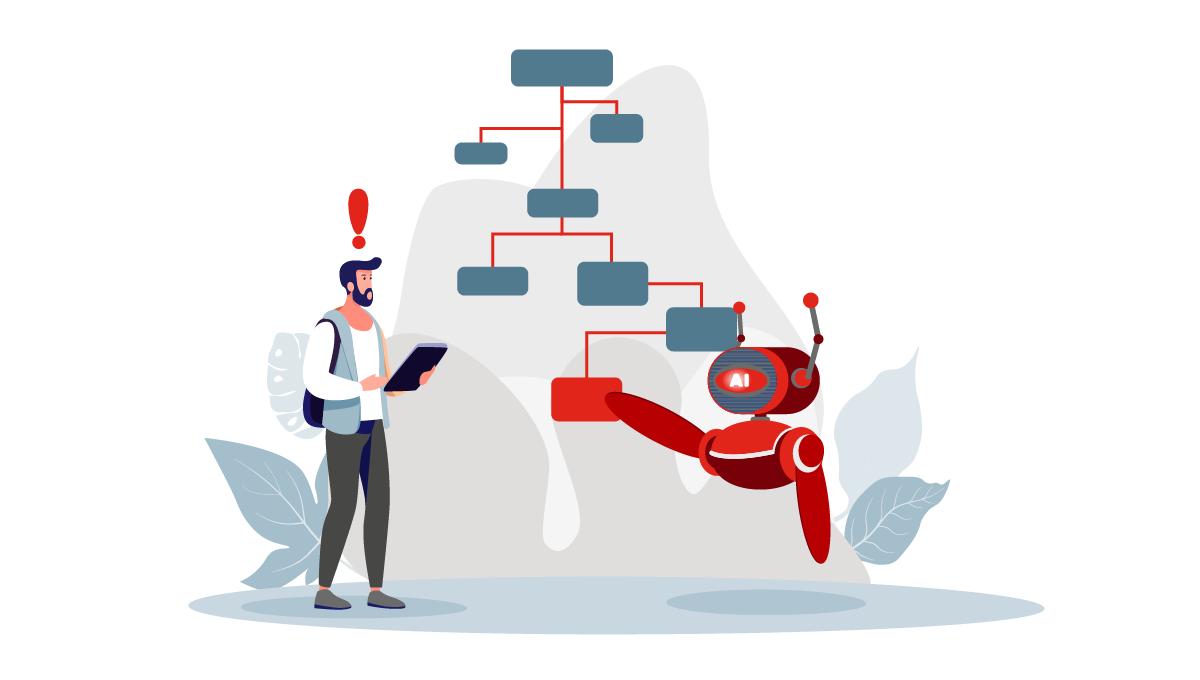
Every AI rollout has the same scene. Someone opens the assistant for the first time and types a question. The answer isn’t what they hoped for. So they fire an email to the team: “It doesn’t work.”
We watched this happen at one customer. Their first prompt was four words: “Show me my financials.” With no context about which financials, for whom, or over what period, the answer wasn’t usable.
Weeks later, the same organization described the AI as the foundation everything else in their platform rests on.
It was the same product. What changed was what they had built around it.
The gap between the first day and a few weeks later is where AI value is won or lost. If you judge AI by what it does on day one, you will always be early to buy and late to benefit.
Coming on Oct. 22: Join the 15-minute microwebinar, “Don’t Judge AI by What it Does on Day 1”
A feature is switched on. A capability is built.
A feature is something you turn on. Flip the switch, and it works or it doesn’t.
A capability is different. You have to work to enable it. Think of AI as a new hire, not a new button.
Nobody expects a new hire to know your acronyms, your reporting quirks, or which numbers leadership trusts on their first morning. You onboard them, and they get more useful every week.
Buyers were trained to expect features. Nearly every AI tool shipped as a chat box, and a chat box looks finished. An empty text field implies you can ask anything and get the answer. So organizations switch it on and hope.
That hope has a cost. A weak first answer is hard to overcome. People try the AI, get a poor result, and don’t feel like using it again. That is what judging on day one looks like.
What you build around AI matters
Three things separate the teams that get value from the teams that stall.
Context: Teach it what your organization means
The AI reads your data. It doesn’t read your conventions.
One customer tracked status in a custom field their teams maintain by hand. The AI had no way to know that, so its answers didn’t line up with the numbers their teams relied on.
What they asked for was simple. They wanted it to know “what the fields mean” in their organization. The fix was context, not a new product.
Prompts that become assets
The best prompts aren’t typed once and forgotten. They’re written by the people who do the work, then refined and reused.
They are also rarely the ones anyone planned. The strongest use cases we’ve seen were discovered after a few days of real use, not specified up front.
Conversation, not one-shot asks
Teams that get value treat the AI as a back-and-forth partner, not a vending machine.
One user spread his validation checks across three or four steps instead of one giant ask. Then he reconciled the results against production. His finding: “They were correct.”
Honesty is part of the capability
Context does something less obvious than fixing answers. It makes them safer to forward.
At one customer, the AI returned the same correct numbers with and without organizational context. With context, it added a caveat: the health metric in question was set on only 2% of projects.
Without that caveat, the numbers read as the whole picture. Imagine them pasted into a steering committee deck. An accurate figure about 2% of the portfolio, presented as the portfolio, is worse than no figure at all.
So building around AI includes teaching it when to say “this is thin.” An assistant that knows the limits of your data is one you can trust with a decision.
What good looks like after day one
Instead of grading the effectiveness of AI by its first answer, look at whether people keep using it.
At one customer, teams kept asking questions every day for nine days after a hands-on workshop, weekends included. Most of the activity came after the event itself, not during it.
Nine days is an early indicator that a tool is gaining traction, not proof. But it is the opposite of the single session that ends in a decision to abandon a tool.
Their sponsor named the shift “moving away from testing and validating to embedding it into the way you operate.”
Testing is how you start, not where you stop. The value comes when the AI has a specific job in how your team works.
Three things to do this month
- Pick one real job. A recurring report, a status roll-up, a validation check. Something a person already does every week.
- Write the context down. Which fields matter, what your terms mean, and where the data is thin.
- Run it for two weeks with the people who do the work. Keep the prompts that earn their place.
None of this needs a new product. You just need to build around the AI you already have.
I will be discussing this approach further in the upcoming microwebinar, “Don’t Judge AI by What it Does on Day 1” on Thursday, Oct. 22, at 10 a.m. CDT.
If you want help building around AI, ask your Planview representative about Planview Anvi enablement services.
Related Posts

Chris helps enterprises move AI from pilot to everyday use. At Planview he leads customer adoption of Anvi, the company's AI assistant, and works at the point where the people building the AI meet the people trying to use it: running customer cohorts, tracing what the AI actually did when it got an answer wrong, and carrying that evidence back to the teams who build it. Chris's mission is to make enterprise AI trustworthy enough to keep using. Most adoption efforts fail not because the model is weak but because one wrong number spends the trust that ten good answers earned, so he focuses on the craft that closes that gap: measuring reliability instead of assuming it, designing the prompts and agents that hold up at scale, and giving leaders a clear view of where to trust the machine and where to check it. He came to this through a decade in value stream management and flow, where he learned that durable change comes from instrumenting the work, not from training people harder. He writes about these ideas in his newsletter, Uncommon Sensemaking.

Chris Gallivan
Principal Product Adoption Manager at Planview
Chris helps enterprises move AI from pilot to everyday use. At Planview he leads customer adoption of Anvi, the company's AI assistant, and works at the point where the people building the AI meet the people trying to use it: running customer cohorts, tracing what the AI actually did when it got an answer wrong, and carrying that evidence back to the teams who build it.
Chris's mission is to make enterprise AI trustworthy enough to keep using. Most adoption efforts fail not because the model is weak but because one wrong number spends the trust that ten good answers earned, so he focuses on the craft that closes that gap: measuring reliability instead of assuming it, designing the prompts and agents that hold up at scale, and giving leaders a clear view of where to trust the machine and where to check it. He came to this through a decade in value stream management and flow, where he learned that durable change comes from instrumenting the work, not from training people harder. He writes about these ideas in his newsletter, Uncommon Sensemaking.